Classification and Performance Evaluation of Counter-FPV Unmanned Aerial Vehicle Defense Technologies
DOI:
https://doi.org/10.3849/aimt.02135Keywords:
FPV drone, counter-UAS, electronic warfare, directed energy, kinetic interception, fiber-optic drone, high-power microwave, laser weapon system, layered defenseAbstract
First Person View (FPV) drones have introduced a low-cost, highly maneuverable threat that conventional air defense was not designed to counter, making it primarily a tactical counter-UAS and force-protection problem. States have responded with countermeasures spanning electronic warfare, kinetic interception, directed energy, and passive defense, while fiber-optic-controlled drones have rendered radio-frequency jamming ineffective. This study classifies and evaluates counter-FPV systems through a structured review of peer-reviewed publications, official statements, and verified procurement contracts (2018-2026), assessing each category against defined operational metrics. The analysis shows that no single category counters all threat dimensions and that a layered architecture combining electronic, kinetic, directed energy, and passive measures is the approach most consistently supported by the reviewed sources.
References
CHAARI, M.Z. Analysis of the Power of Drones and Limitations of the Anti-Drone Solutions on the Russian-Ukrainian Battlefield. Security and Defence Quarterly, 2025, 51(3), pp. 38–73. DOI 10.35467/sdq/208347.
TYTARENKO, O. Countering FPV Drones: Insights from Ukraine’s Combat Experience. Advances in Military Technology, 2025, 20(2), pp. 421–434. DOI 10.3849/aimt.01998.
Projected Acquisition Costs for the Army’s Ground Combat Vehicles [online]. 2021 [viewed 2026-07-07]. Available from: https://www.cbo.gov/publication/57103
CHAUHAN, R.K. et al. Nation’s Defense: A Comprehensive Review of Anti-Drone Systems and Strategies. IEEE Access, 2025, 13, pp. 53476-53505. DOI 10.1109/ACCESS.2025.3550338.
DE CUBBER, G., et al. Standardized Evaluation of Counter-Drone Systems: Methods, Technologies, and Performance Metrics. Drones, 2025, 9(5), 354. DOI 10.3390/drones9050354.
Frontline Innovation: NATO’s 16th Innovation Challenge Counters Fibre-Optic Controlled Drone Threats [online]. 2025 [viewed 2026-07-07]. Available from: https://www.act.nato.int/article/innovation-challenge-fibre-optic-drones/
BRASZKO, A. Fiber Optic Drones: Posing a Significant C-UAS Challenge [online]. 2025 [viewed 2026-07-07]. Available from: https://www.army.mil/article/287737/
KAPOULAS, I.K., A. HATZIEFREMIDIS, A.K. BALDOUKAS, E.S. VALA-MONTES and J.C. STATHARAS. Small Fixed-Wing UAV Radar Cross-Section Signature Investigation and Detection and Classification of Distance Estimation Using Realistic Parameters of a Commercial Anti-Drone System. Drones, 2023, 7(1), 39. DOI 10.3390/drones7010039.
BJÖRKLUND, S. and H. HERNNÄS. Statistical Analysis of the Radar Cross Section of Two Small Fixed-Wing Drones Using Typical Flights. IET Radar, Sonar & Navigation, 2024, 18(1), pp. 125–136. DOI 10.1049/rsn2.12522.
PATEL, J.S., F. FIORANELLI and D. ANDERSON. Review of Radar Classifi-cation and RCS Characterisation Techniques for Small UAVs or Drones. IET Radar, Sonar & Navigation, 2018, 12(9), pp. 911–919. DOI 10.1049/iet-rsn.2018.0020.
Epirus’ Leonidas Demonstrates Successful Use of High-Power Microwave to Defeat Fiber-Optic Controlled UAS [online]. 2026 [viewed 2026-07-07]. Avail-able from: https://www.epirusinc.com/press-releases/epirus-leonidas-demonstrates-successful-use-of-high-power-microwave-to-defeat-fiber-optic-controlled-uas
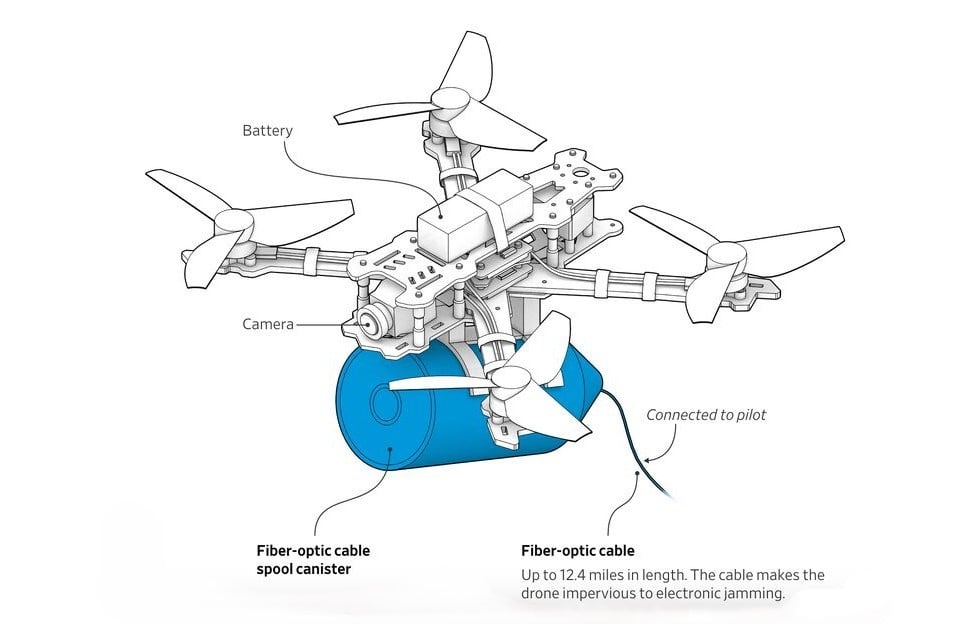
Fiber-Optical Drone UAV Simple Structure [online image] [viewed 2026-07-07]. Available from: https://www.fiber-mart.com/images/05/Fiber-Optical-Drone-UAV-Simple-Sturcture.jpg
XVIII Airborne Corps Drone Round C-sUAS Familiarization [online]. 2026 [viewed 2026-07-07]. Available from: https://www.dvidshub.net/image/9607867/
xviii-airborne-corps-drone-round-c-suas-familiarization
HAMBLING, D. “Defeat” by Drones Teaches U.S. Army Hard FPV Lessons the Easy Way [online]. 2026 [viewed 2026-07-07]. Available from: https://www.forbes.com/sites/davidhambling/2026/04/21/defeat-by-drones-teaches-us-army-hard-fpv-lessons-the-easy-way/
Yolka Interceptor Drone [online image]. [viewed 2026-07-07]. Available from: https://pbs.twimg.com/media/GxHDcDbXEAAVbEI.jpg
Epirus’ Leonidas High-Power Microwave Defeats 49-Drone Swarm, 100% of Drones Flown at Live-Fire Demonstration [online]. 2025 [viewed 2026-07-07]. Available from: https://www.epirusinc.com/press-releases/epirus-leonidas-high-power-microwave-defeats-49-drone-swarm-100-of-drones-flown-at-live-fire-demonstration
Leonidas High-Power Microwave (HPM) System [online image]. [viewed 2026-07-07]. Available from: https://www.army-technology.com/wp-content/uploads/sites/3/2022/06/Featured-Image-Leonidas-High-Power-Microwave-HPM-System.jpg
Lockheed Martin Delivers Integrated Multi-Mission Laser Weapon System to the Navy [online]. 2022 [viewed 2026-07-07]. Available from: https://news.lockheedmartin.com/2022-08-18-Lockheed-Martin-Delivers-Integrated-Multi-Mission-Laser-Weapon-System-to-the-Navy
316m Deal for Royal Navy’s First Laser Weapon after Successful High-Speed Drone Trials [online]. 2025 [viewed 2026-07-07]. Available from: https://www.royalnavy.mod.uk/news/2025/november/20/20251120-dragonfire-trials
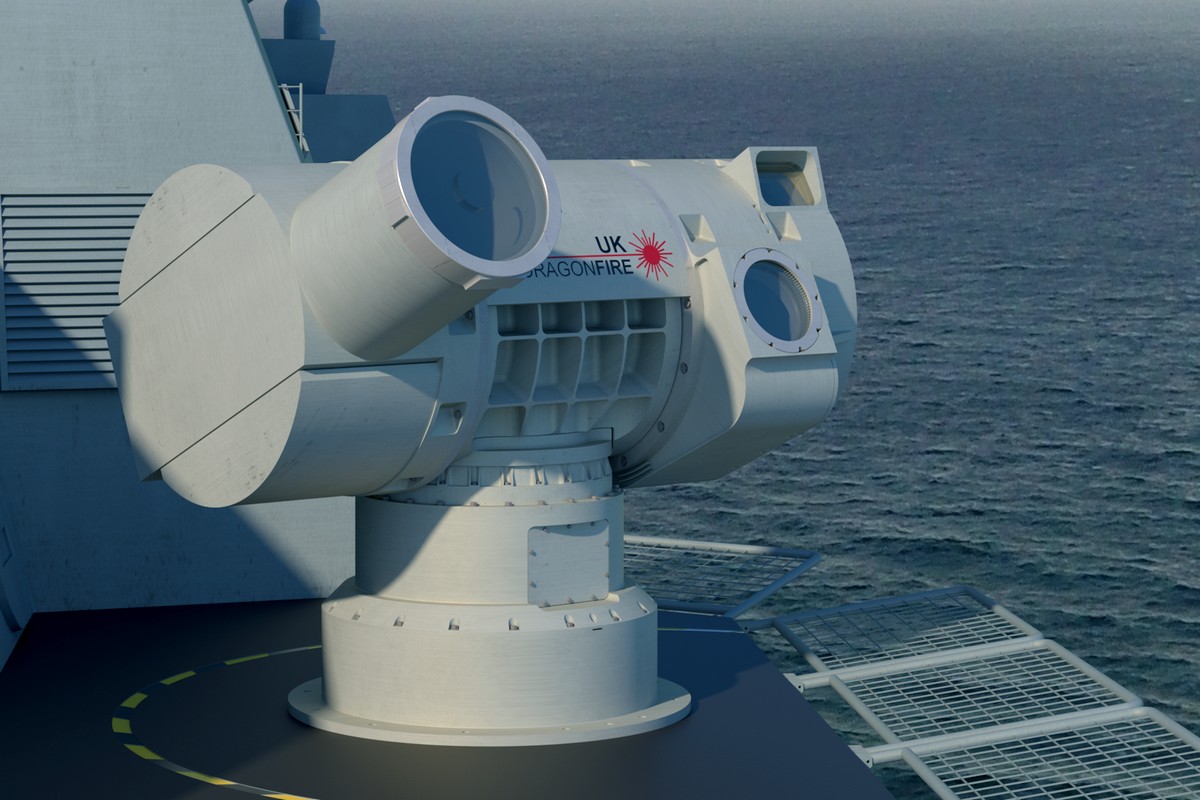
DragonFire Laser [online image]. [viewed 2026-07-07]. Available from: https://ukdj.ams3.digitaloceanspaces.com/2025/11/dragon.jpg
Downloads
Published
License
Copyright (c) 2026 Advances in Military Technology

This work is licensed under a Creative Commons Attribution-NonCommercial 4.0 International License.
Authors who publish with this journal agree to the following terms:
1. Authors retain copyright and grant the journal right of first publication with the work simultaneously licensed under a Creative Commons Attribution License that allows others to share the work with an acknowledgement of the work's authorship and initial publication in this journal.
2. Authors are able to enter into separate, additional contractual arrangements for the non-exclusive distribution of the journal's published version of the work (e.g., post it to an institutional repository or publish it in a book), with an acknowledgement of its initial publication in this journal.
3. Authors are permitted and encouraged to post their work online (e.g., in institutional repositories or on their website) prior to and during the submission process, as it can lead to productive exchanges, as well as earlier and greater citation of published work.
Users can use, reuse and build upon the material published in the journal for any purpose, even commercially.